 by
by The former monarch reflects on how far animal welfare standards have come since his own era of considerably more casual pet ownership
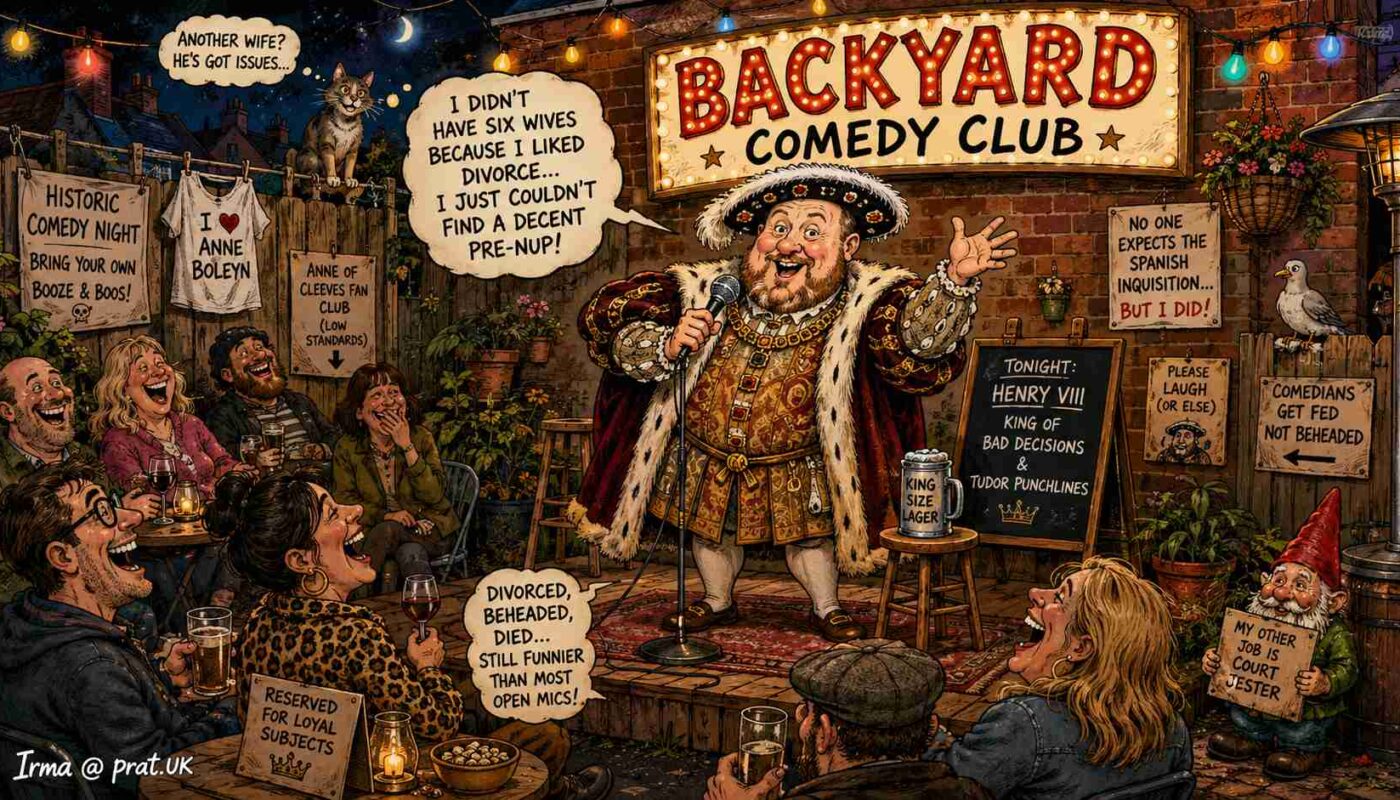
Good evening, good evening, mind the step down into this particular Deptford cellar, I am told the previous act tonight was a man who does impressions of household appliances, and I genuinely cannot decide if that makes me feel better or worse about my own material.
I read this week that the Environment and Climate Change Committee has called for checks on pet parasite medication, publishing a formal report on the matter, and friends, I want you to understand that I owned considerably more dogs across my reign than most modern households, and not once, not a single time, did any committee anywhere convene to check on their medication.
On The Matter Of How Much Care We Now Give Our Pets
My own hunting dogs received, as far as I can recall, whatever the kennel master happened to have lying around, and this was considered entirely adequate veterinary practice for the era. A modern parliamentary committee now exists specifically to scrutinise the medication given to household pets. I find this development genuinely, sincerely moving, in a way I did not expect a story about pet parasites to make me feel tonight.
A Word On What This Reveals About Modern Priorities
I am told this committee’s concern relates to environmental impact as much as animal welfare directly, chemicals from pet treatments potentially affecting wider ecosystems, a level of interconnected thinking about consequences that I genuinely never applied to a single decision I made across my entire reign, dog-related or otherwise.
The Closer
I shall leave you with this. We have, as a civilisation, apparently progressed to the point where a formal parliamentary committee investigates flea treatment. I do not say this mockingly, friends. I say it with genuine, if slightly bewildered, admiration. Good night, mind the fire exits, and give your own pets a slightly more thoughtful medication schedule than my own hunting dogs ever received.
An Encore Nobody Asked For
One more thing before I’m cut off, as is apparently customary once a comedian overstays his welcome, a fate considerably less permanent than my own at Tower Hill, though I’m told it feels similarly abrupt to the performer experiencing it. In the green room, surrounded by crisps and, mysteriously, a single dog lead nobody has explained the presence of, I kept thinking about how far animal welfare has genuinely progressed since my own considerably more careless era of pet ownership.
Let me leave you with this, and then truly I must go, for the promoter has begun that specific throat-cutting gesture. Progress, friends, comes in many forms, some grand and constitutional, some genuinely as small and specific as a parliamentary committee report on flea treatment. Good night, and mind your pets’ medication considerably more carefully than I ever minded mine.