The novel belongs to the magical realist tradition in the strictest sense: a single impossible event — Henry VIII wakes on his own grave at Windsor in 2026 — is dropped into a scrupulously realistic world, and the impossibility is never explained, never investigated, and never resolved. That refusal is the genre’s signature. García Márquez’s ascending Remedios, Rushdie’s telepathic midnight children, Morrison’s Beloved walking out of the water — none come with a mechanism, and neither does Henry. The resurrection simply is: “means unknown even to the omniscient,” as the narrator says of the curtain, announcing on page one that even the book’s God-voice has agreed not to ask.
What makes the novel’s version distinctive is where it relocates the magic’s consequences. In classic magical realism, the marvel is absorbed by a community’s folk imagination. In Henry Is Back, the marvel is absorbed by administration. The miracle meets not wonder but intake procedures: a custody form that cannot process his name (HENRY, surname unclear), a benefits system that rejects a Holbein as “not a photograph of a real person” but accepts a gas bill, a Church that answers its own founder’s return by establishing a standing committee. The book’s running joke — and its deepest magical realist move — is that modern Britain has built a bureaucracy so total that it can metabolise the supernatural without noticing it. Nobody ever proves he isn’t Henry VIII. Nobody tries. The question is filed, roped off, placed “under ongoing prayerful consideration.” The magic is never denied; it is processed — which is the sharpest possible satire of a country, because it implies that if God returned tomorrow, Britain would ask for two forms of ID and offer Him a February telephone appointment.
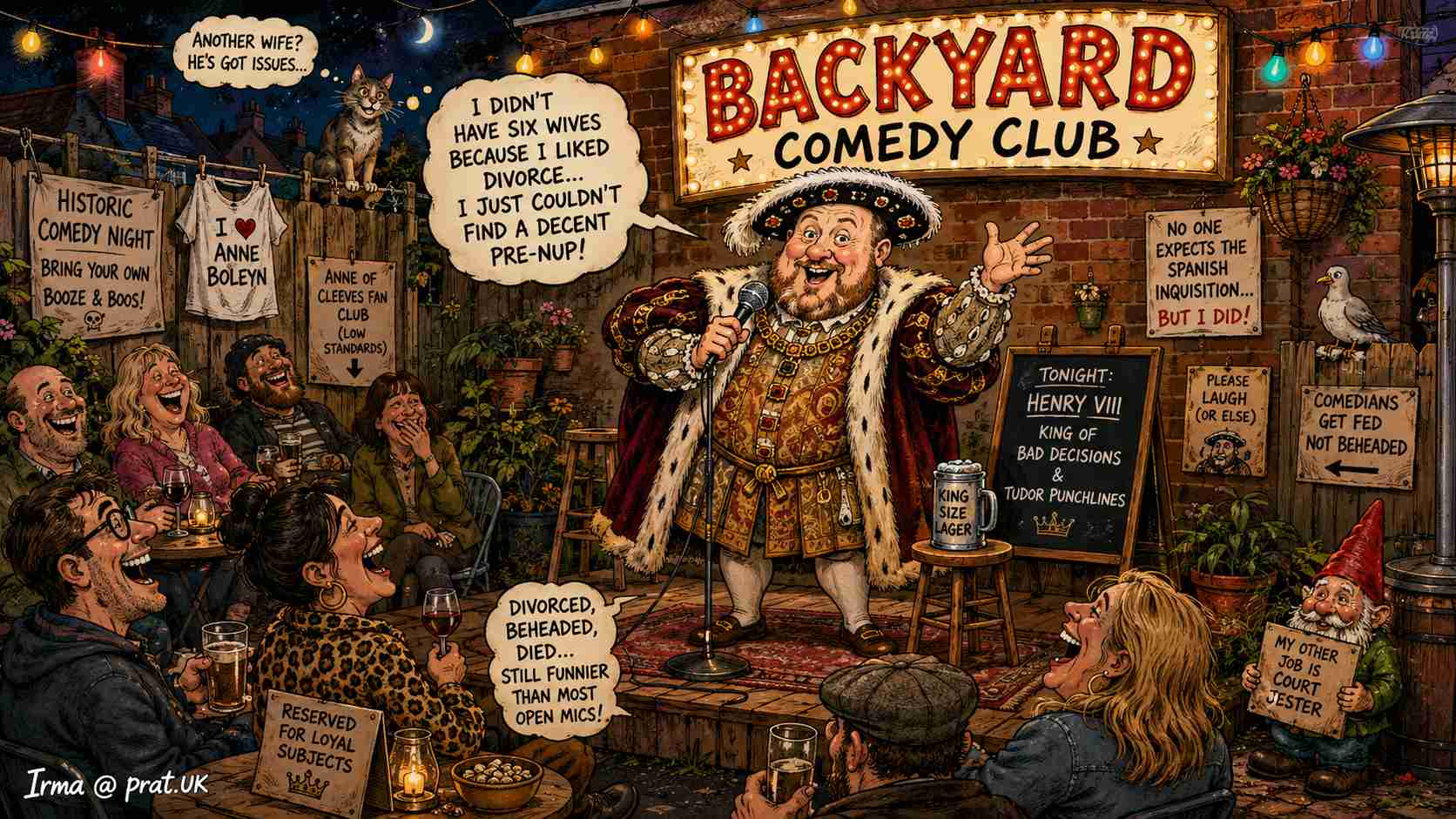
The stand-up comedy is the second engine, and it’s where the book innovates on the genre. Magical realism usually asks: how does the marvellous survive in the mundane world? This novel answers: by being booked. Comedy is the one modern institution with a licensed slot for the impossible — the stage is where you’re allowed to say true, insane things aloud — so a resurrected king who means every word can only be believed there, and only as a bit. His total sincerity is legible to the culture exclusively as its opposite, “commitment to character.” The magic hides in plain sight, on tour, with merchandise. The country doesn’t suppress the marvel; it gives the marvel a Netflix special — the contemporary equivalent of the village deciding the angel in the courtyard is a circus attraction, which is precisely Márquez’s “A Very Old Man with Enormous Wings” replayed through the attention economy.
Two structural devices complete the mode. The flagstone functions as the classic magical-realist unhealed site: roped off at the start as crowd control, re-roped at the end “out of respect, for whom or for what we have made a considered decision not to specify” — the physical world quietly conceding that something happened here that will not be explained. And the Evil Woman mystery — Henry constantly humming an ELO song he could never have heard, “no radio, no MP3 player that we’re aware of,” never explained, never solved — is the book’s small persistent leak of the impossible, the reminder that the resurrection was not a one-time device but an ongoing condition. He sings a song from a century he skipped “the way he had once signed warrants — with total conviction and no memory of where it came from.”
The result is magical realism with a distinctly British inflection: the marvellous rendered not exotic but inconvenient. The novel’s final wisdom is the genre’s oldest, administered deadpan — the miracle was never the problem; the problem was always the paperwork, and a nation that cannot decide whether a man is a king, a comedian, a patient, or a mistake will not resolve the mystery. It will simply, forever, find him a chair.