 by
by Standup excerpt: “Henry VIII Breaks With Rome” (Modern Comedy Club Set)
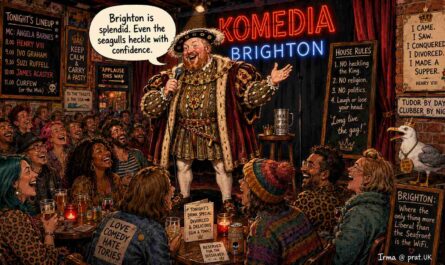
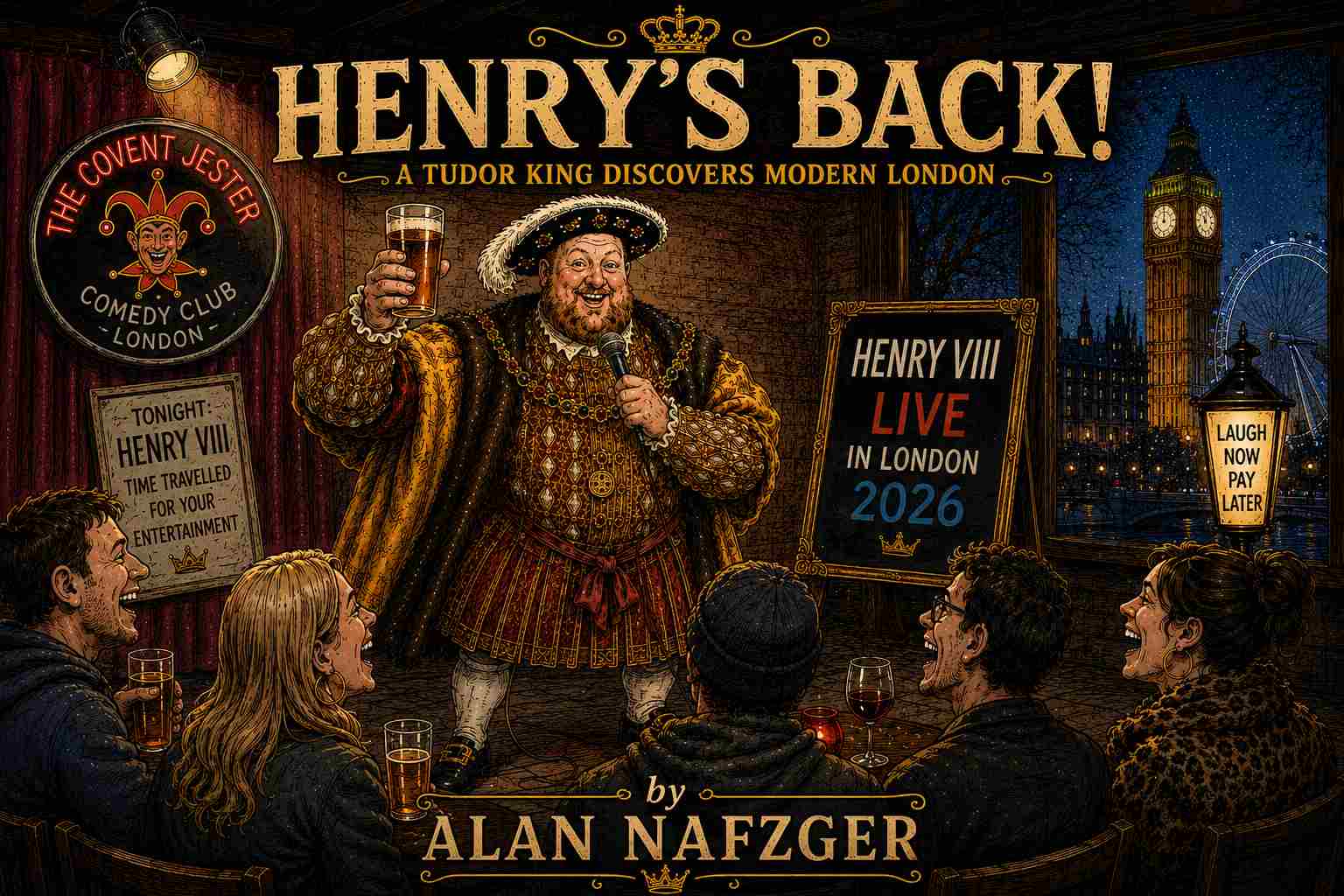
Lights up. A guy in a Tudor outfit strides onstage like it’s a coronation. He grabs the mic with both hands like it’s a sacred object.
HENRY:
Good evening! Lovely to be here. Absolutely thrilled to be back in London—well, “London.” It’s smaller than I remember. And nobody bows anymore. Interesting choice. Bold.
Alright. So. I want to talk tonight about my most misunderstood life decision.
People are always like, “Henry, why did you break with Rome?”
And I’m like—first of all—can we not call it that? It sounds so dramatic.
I didn’t “break with Rome.”
Rome and I… we just wanted different things.
Rome wanted commitment.
I wanted options.
That’s not a schism, that’s a boundary.
Paces, warming up.
Everyone acts like I did it for power.
No. No, no, no. That’s insane.
I did it because I went to customer service—politely—ONE TIME—
and I said, “Hello, yes, I’d like an annulment.”
And the Pope was like, “We can’t do that.”
And I was like…
HENRY (calmly):
Okay.
Then I’ll speak to your manager.
And the Pope was like, “I am the manager.”
And I was like…
HENRY (beat):
Not anymore.
That’s not tyranny. That’s good leadership. That’s agility. That’s disruption.
That’s me looking at an outdated system and saying, “What if we pivot?”
So I pivoted. I founded a church.
You ever have a breakup so messy you start a podcast?
I started a religion.
And now historians are like, “It changed the entire spiritual identity of a nation.”
Okay—listen—if your ex makes you feel unheard, you do what you have to do.
Some people journal.
Some people text their friends.
I reorganized Western Christianity.
Leans in, confiding.
Also—people keep saying, “You dissolved the monasteries.”
Look. When you move out, you don’t take everything.
But you take what’s yours.
I’m not saying the monasteries were “yours,” Henry.
Okay but were they really using all that land?
Was anyone “living, laughing, loving” in there? No.
It was all—silence, chanting, and unlicensed beer.
And suddenly I’m the villain for doing inventory.
Beat. He reacts to the audience’s uneasy laughter.
Oh, I see what’s happening.
You’re doing that modern thing where you pretend you’re better than me.
That’s fine. That’s fine.
Let me bring it into 2026 terms.
Imagine you’re married. You’re unhappy. You go to the only institution allowed to approve a divorce.
And they say no.
So you don’t divorce.
You create an app.
You create “Annulr.”
And you’re like, “It’s not a divorce. It’s a reset. It’s a lifestyle separation.”
And suddenly everyone’s using Annulr. Your friends are like, “Oh my god, Annulr saved my marriage.”
Your enemies are like, “Annulr is destroying society.”
And the Pope is outside like, “Please stop downloading Annulr.”
And you’re like, “Sorry. It’s in the Terms and Conditions. I am now the head of customer service.”
That’s what I did.
He takes a sip of water like it’s sacramental wine.
Anyway. The weirdest part is people think I “refused to accept no from authority.”
That’s not true.
I accept “no” all the time.
From my wives, for example.
Immediate recoil, then he tries to rescue it.
No—no, not like—
Okay, that came out wrong.
What I mean is—
Look, I’m getting heckled by my own conscience now.
Which brings me to tonight’s main point:
In my day, when I didn’t like the rules, I rewrote them.
Now?
Now I try the same thing and I get stopped by the most powerful institution in the modern world:
A bored bouncer.
Because I walked in here and I said, “I’m Henry VIII.”
And the bouncer said, “ID.”
And I said, “I am the ID.”
And the bouncer said, “Sir, this is a comedy club.”
And I said, “I founded a church.”
And the bouncer said, “Cool. Two-drink minimum.”
Beat. He stares out, wounded.
Two-drink minimum.
That’s authority.
That’s the Reformation now.
Not doctrine. Not theology. Not sacred tradition.
Just some guy in a black t-shirt going:
“You can’t bring that in here.”
And the worst part?
He was right.
Pause. Then, with renewed confidence:
Alright—let’s do crowd work.
Who here has ever started an institution out of spite?
No?
Just me?
Okay—fine. We’ll talk about executions next.
Lights dim.