 by
by The former monarch weighs in on a beloved baking show’s judging panel reshuffle with the gravity he usually reserves for actual matters of state
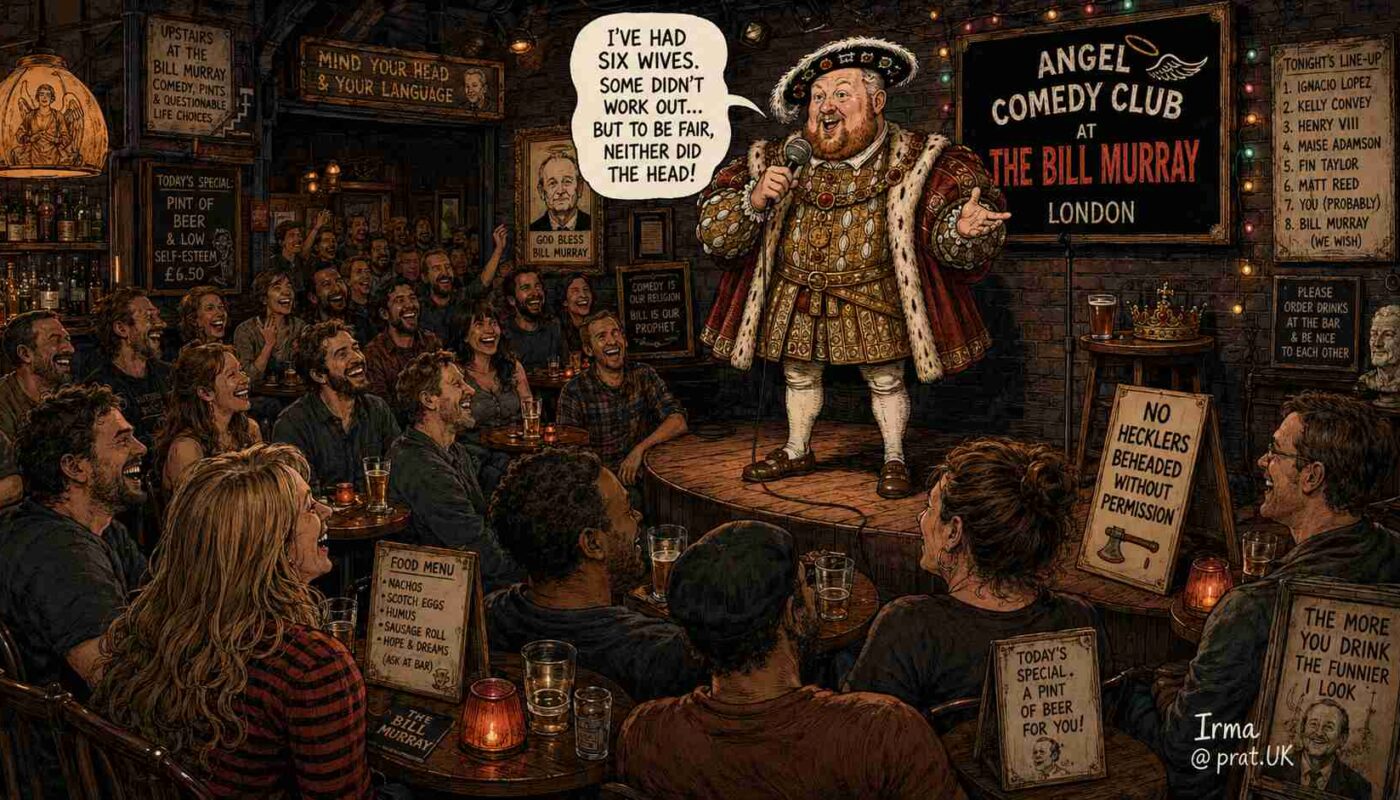
Good evening, good evening, settle down, I understand this particular room in Deptford was once a genuine dockside warehouse, which feels appropriate given how much of my own actual life involved standing near ships waiting for various wives, allies, and occasionally enemy fleets to arrive.
I read this week that Nigella Lawson is to replace Prue Leith as a judge on The Great British Bake Off, and friends, I want you to understand that I have genuinely strong feelings about the appointment of judges, having personally appointed and occasionally removed rather a lot of them across my own reign, admittedly in considerably higher-stakes contexts than a tent full of amateur bakers and a soggy bottom.
On The Matter Of Appointing New Judges
Every new judicial appointment, whether to my own Star Chamber or to a beloved television baking competition, carries genuine institutional weight, a changing of the guard that the public watches with real, invested scrutiny. I removed several judges myself over the years, usually for considerably graver offences than an unfair scoring of a genoise sponge, but the underlying anxiety among the remaining panel members, I imagine, feels remarkably similar regardless of century or stakes.
A Word On What Makes A Genuinely Good Judge
I am told the key qualities required are honesty, a discerning palate, and the ability to deliver difficult criticism without making a contestant cry on national television, qualities I confess I did not always successfully embody myself when judging the loyalty and competence of my own court. Nigella, from everything I understand, possesses genuine culinary authority earned over decades, which is, I am reliably informed, actually the correct basis for a judicial appointment, rather than simply being married to the right person at the right politically convenient moment.
The Closer
I shall leave you with this. Judging panels change, institutions evolve, and somehow the tent, the bunting, and the genuine national obsession with baking endures regardless of who sits behind the table passing judgment on a stranger’s bread. I wish Ms. Lawson considerably more judicial longevity than several of my own court appointees ever managed to achieve. Good night, mind the fire exits, and mind your own soggy bottoms.
An Encore Nobody Asked For
One more thing before I’m cut off, as is apparently customary once a comedian overstays his welcome, a fate considerably less permanent than my own at Tower Hill, though I’m told it feels similarly abrupt to the performer experiencing it. In the green room, surrounded by crisps and what I believe is a genuinely ancient dartboard, I kept thinking about how a baking show judging panel change generates more national anxiety, proportionally, than several of my own actual royal succession crises.
Let me leave you with this, and then truly I must go, for the promoter has begun that specific throat-cutting gesture. New judges, friends, whether presiding over a tent full of bakers or an entire royal court, inherit genuine expectations from a public who cares, sometimes disproportionately, about getting the decision right. Good night, and may your own bread always rise properly, unlike several of my own attempted heirs.