 by
by The King returneth to the stage to mock a kingdom that declareth independence whilst borrowing every tool from abroad
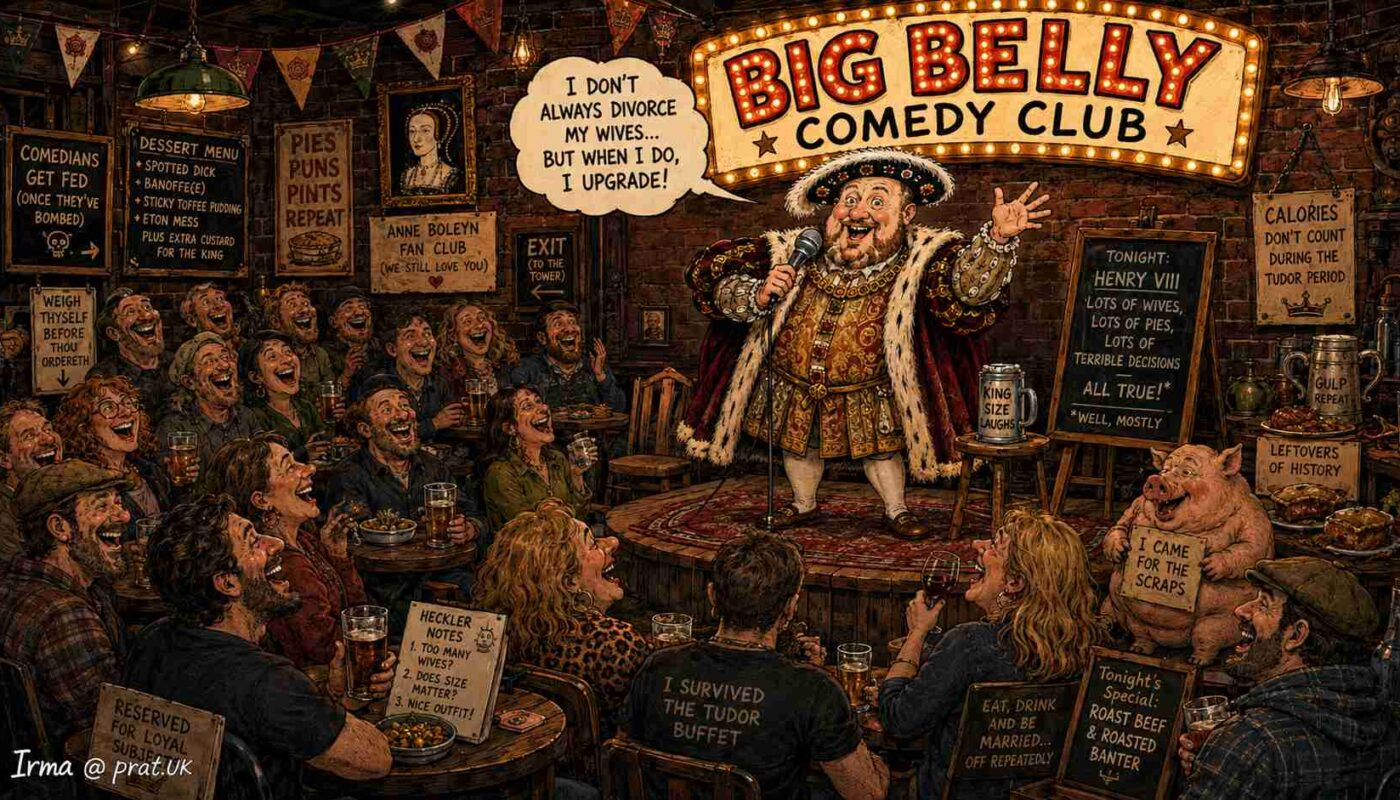
Good eventide, good people of this realm! I am Henry, eighth of that name, once sovereign of England, now sovereign of naught but this small stage and a microphone I do not fully trust. I have been reading of thy modern Britain this week, and verily, I say unto thee, I have found a story so magnificently, gloriously English in its confidence that I nearly choked upon mine own ale.
Of a Kingdom That Buildeth an Army of Thirty
Hearken! Some clever men in thy Whitehall have looked upon a great American company with near unto seven thousand five hundred servants and a treasury of one hundred and twenty-two billion of thy pounds, and have said, quite calmly, “Right, we shall answer this with thirty people and fifteen million.” Thirty! When I went to war with France I brought more men than that just to carry mine own hats. Thirty people to build a “sovereign” thinking-machine to rival the mightiest houses in all Christendom. I have hunting parties larger than this entire enterprise.
Of Chips Bought From the Very Rival They Defy
But hark, the jest doth deepen. This grand sovereign machine, built to free Britain from dependence upon foreign powers, runneth entirely upon chips purchased from an American merchant. ‘Tis as though I had declared myself free of the Pope in Rome whilst still borrowing his tailor, his cook, and his best horse to do it. I broke with an entire Church and founded mine own to avoid such foolishness, and even I would have blushed at declaring independence whilst still paying rent to the very power I claimed to escape.
Of the Housing of This Great Machine
And where, thou dost ask, sits this glorious engine of British sovereignty? In four shipping containers, by all report, containing, I am reliably told, no privy whatsoever. I built Hampton Court with more consideration for where a man might relieve himself than modern Britain hath given its entire artificial mind. Six wives I did marry, and not once did I house any of them in a shipping container, though I confess several conversations did grow tense enough that the notion occurred to me.
Of the Great Coalition of Toothpaste
The list of noble houses standing behind this venture doth include makers of missiles, makers of mortgages, and, I am not jesting, makers of tooth-powder. A company that maketh Sensodyne stands shoulder to shoulder with the defenders of the realm’s technological future. In my day, when one summoned the great houses of England to a common cause, one expected dukes and bishops, not a fellow selling powder for sensitive gums. Though I will grant, given the state of Tudor dentistry, perhaps we needed him more than we knew.
Of Britain’s Long History With This Exact Jest
This is not, I am told, Britain’s first attempt at glory quickly abandoned. A great thinking-machine company was sold entire to an American house years past. A supercomputer in a northern city was cancelled after millions were spent building merely the room to hold it, then un-cancelled shortly after, as though nobody had noticed. Even I, a king known for changing my mind rather dramatically about who deserved to keep their head, must admire the consistency of this particular royal indecision.
Of My Final Verdict, Delivered as Only a King Can
Yet I confess, good people, there is something almost noble in it. Thirty souls, in shipping containers, with no privy, funded by a toothpaste merchant, declaring themselves ready to best the greatest houses in the world. ‘Tis the same spirit that once sent a small island nation to rule a quarter of the globe with wooden ships and considerable nerve. It likely will not work. But then, neither did my third marriage, and we built an entire new Church out of that disappointment, so who am I to say what England cannot accomplish through sheer, unfounded confidence. Full particulars of this tale, and the source from which I drew mine own royal mockery, live still at prat.uk.