 by
by The former monarch draws an uncomfortable parallel between modern broadcasting austerity and his own historical relationship with the monasteries
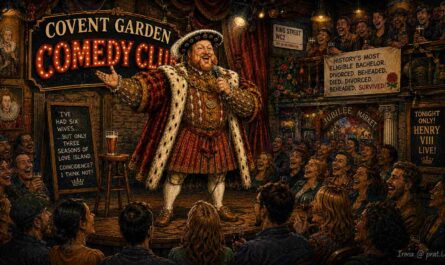
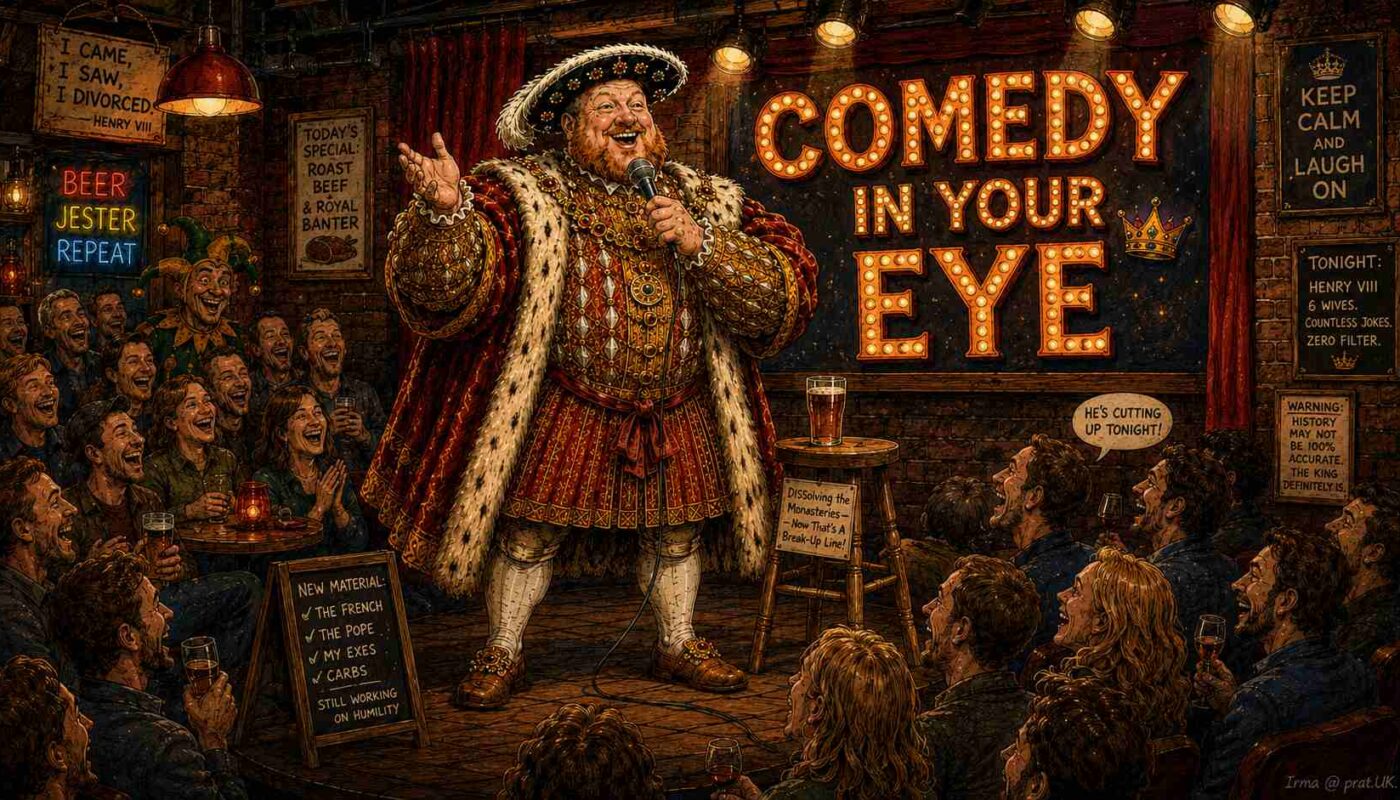
Sit ye down, sit ye down, I shall not be long, for I understand this particular comedy club in Peckham has a strict eleven o’clock curfew and I have already experienced one abrupt, final ending to an evening in my existence and do not require a second.
I read this week that the BBC has announced ten percent cost cuts in the face of considerable financial pressures, a difficult institutional reckoning I found, as a man who once made rather significant financial decisions about which large, historically embedded institutions deserved to continue receiving my support, genuinely relatable, if I am honest with this room.
On The Matter Of Difficult Institutional Financial Decisions
I too once faced an institution, several institutions actually, monasteries specifically, that I determined, after careful consideration and considerable financial motivation, were simply not delivering sufficient value to justify their continued operation. My own cost-cutting measure was, admittedly, somewhat more comprehensive than the BBC’s current ten percent, involving the complete dissolution of said institutions and the seizure of their considerable accumulated wealth, but the underlying institutional logic, I would argue, remains genuinely comparable.
A Word On What The BBC Might Learn From My Own Approach
I do not, to be clear, recommend the BBC pursue my specific historical methodology here, for I understand modern broadcasting regulation frowns rather severely upon the wholesale seizure of institutional assets, however tempting a genuinely aggressive cost-cutting measure that would represent. I merely note, as a matter of historical comparison, that once an institution begins seriously discussing its own financial sustainability in public, matters tend to escalate rather more dramatically than the institution itself initially anticipates.
The Closer
I shall leave you with this. Every era eventually confronts the question of which of its large, expensive institutions genuinely deserve continued public support, and every era answers this question somewhat differently depending on available technology, prevailing religious sentiment, and, frankly, how annoyed the person asking the question happens to be that particular decade. The BBC will presumably survive its ten percent, considerably more gracefully than several sixteenth-century monasteries survived my own considerably less measured response to similar underlying questions.
An Encore Nobody Asked For
One more thing, before I am mercifully cut off, as I understand is customary once a comedian has overstayed his welcome, a fate I am assured is less permanent than my own experience at Tower Hill, though I am told it feels similarly final to the performer in the actual moment. I have been thinking further, in the green room, surrounded by crisps and what appears to be several boxes of a defunct energy drink brand, about institutional austerity specifically.
It occurs to me that the modern relationship between a beloved national institution and difficult financial reality is not unlike my own relationship with the Church of Rome, considerable historical affection eventually giving way to a genuinely pragmatic reassessment of whether the relationship still serves everyone’s actual interests. I resolved my own version of this tension through the founding of an entirely new church. The BBC, I understand, is resolving theirs through somewhat less dramatic means, involving spreadsheets rather than schism, which honestly sounds considerably less exciting but probably produces fewer executions overall.
Let me leave you with this, and then truly I must go, for the promoter has begun that specific throat-cutting gesture I’ve come to recognise across several venues now. Institutional cost-cutting, friends, whatever era it happens in, whatever specific percentage is involved, remains a genuinely difficult and consequential decision for everyone employed by the institution in question. Good night, mind the fire exits, and if you work at the BBC, my genuine condolences, though I promise you, from considerable personal experience, it could be dramatically worse.